
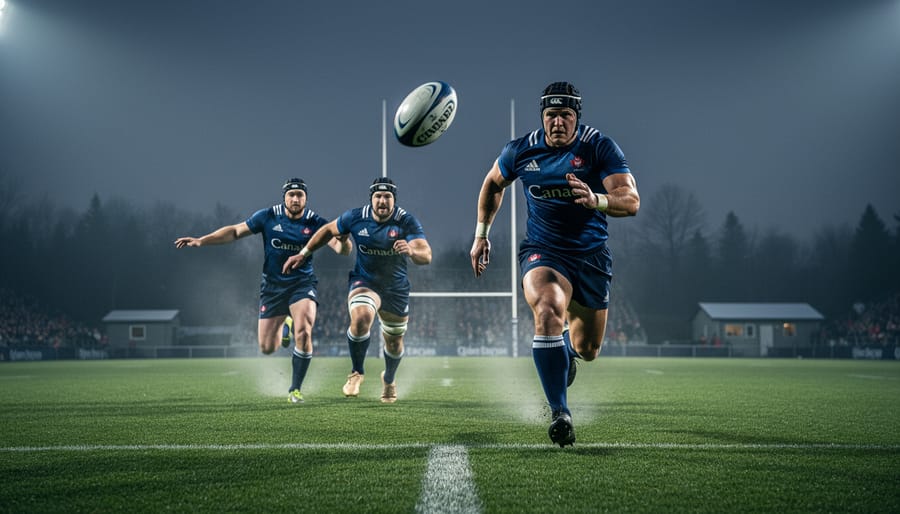
Rugby in Canada sits in an intriguing position: not mainstream like hockey or football, but far from obscure, with participation and visibility climbing steadily across the country. The sport claims roughly 125,000 registered players nationwide, ranking it among the fastest-growing team sports in Canada over the past decade, yet it still operates largely outside the spotlight of major broadcast networks and national sports conversations.
For those considering whether to join a club, invest in the sport, or simply understand its place in Canadian culture, the answer matters. Rugby’s popularity varies dramatically by region and demographic. British Columbia leads in both participation and public awareness, thanks to strong grassroots programs and professional pathways. Ontario follows closely, while Quebec has emerged as a vital growth market, particularly in Montreal and surrounding areas where youth programs have flourished.
The national teams tell part of the story. Canada’s men’s team has competed in every Rugby World Cup since 1987, and the women’s squad stands among the world’s elite, consistently ranking in the top tier of international competition. These achievements fuel local interest, drawing new players into clubs and inspiring communities to build rugby infrastructure.
What makes rugby’s Canadian story compelling isn’t just raw numbers. It’s the trajectory. Schools are adding programs, universities are investing in facilities, and communities that never had clubs a generation ago now field multiple teams across age groups. The sport occupies a unique space: niche enough to foster tight-knit communities, popular enough to sustain real growth and opportunity.
The Current State of Rugby Popularity in Canada
Rugby occupies an interesting middle ground in Canada’s sports landscape. It’s no longer a niche curiosity played only at universities and expatriate clubs, but it hasn’t broken into the tier of hockey, lacrosse, or soccer. The numbers tell a story of steady, meaningful growth rather than explosive popularity.
Rugby Canada reports over 29,000 registered participants nationwide, a figure that’s climbed consistently over the past decade. That’s modest compared to the hundreds of thousands playing hockey or soccer, yet it represents real communities gathering on fields from coast to coast. The sport’s footprint includes:
- More than 400 rugby clubs operating across all provinces and territories
- Ten provincial unions coordinating competition and development programs
- Growing youth participation, with under-19 programs expanding faster than senior rugby
- Increasing women’s involvement, now representing roughly 30% of registered players
Regional patterns reveal where the sport has taken deepest root. British Columbia leads in absolute numbers, benefiting from mild winters and strong school programs. Ontario follows closely, supported by diverse communities and university pipelines. Quebec punches above its weight in national influence, Rugby Quebec has 3,915 players representing over 13% of Canada’s rugby population despite the province’s winter climate and fierce competition from hockey culture.
The participation picture varies dramatically by region. Prairie provinces show pockets of enthusiasm but struggle with player retention during long winters. Atlantic Canada maintains loyal communities despite smaller populations. The sport thrives in urban centres where immigrants from rugby-playing nations, South Africa, England, France, New Zealand, have brought their passion and expertise to Canadian clubs.
Compared to traditional Canadian sports, rugby remains the underdog. Yet that status is shifting as international exposure grows and communities recognize rugby’s values of respect, inclusivity, and athletic development.
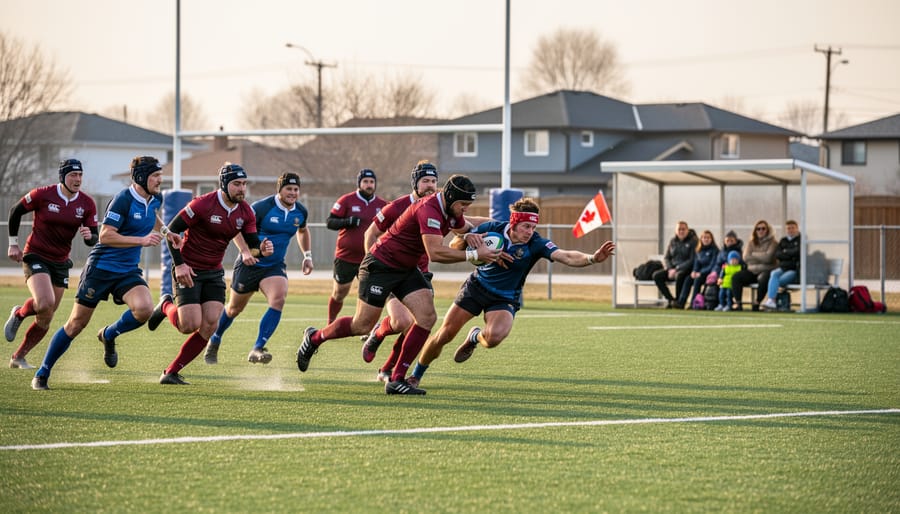
How National Team Success Changes Everything
The Ripple Effect of International Competition
When Canada’s Sevens teams step onto Olympic fields or the men’s XV squad takes on established rugby powers, the impact extends far beyond the final score. A strong World Cup performance or an Olympic medal run can transform rugby from an unfamiliar sport into must-watch television for Canadian households. That visibility creates a generation of local heroes whose faces appear on community centre walls from St. John’s to Vancouver, giving young players someone who looks like them and speaks like them to emulate.
The numbers bear this out. After Canadian teams compete on international stages, Olympic impact reaches new audiences who might never have considered the sport before. Club registrars across provinces report spikes in youth inquiries the week following major tournaments. A single broadcast highlight of a Canadian player scoring against New Zealand does more for participation than months of grassroots promotion.
Media coverage follows success. Regional sports networks that once ignored rugby suddenly produce feature segments when national team athletes return home to train with their clubs. Local newspapers profile provincial players called up to national training camps. This creates a virtuous cycle: visibility brings players, more players build competitive depth, stronger teams earn more visibility. Quebec’s clubs have experienced this firsthand as homegrown athletes advance through national pathways and return as mentors, carrying hard-won international experience back to the fields where they started.
From National Spotlight to Community Fields
When Canada’s women’s sevens team claimed bronze at the 2016 Rio Olympics, rugby clubs across the country saw something remarkable happen. Registration inquiries doubled within weeks. Kids who’d never touched an oval ball suddenly wanted to try the sport their new heroes played.
That pattern repeats with every World Cup cycle and major tournament. A strong Canadian performance translates directly into fuller fields at local clubs. Coaches report that post-tournament enrollment spikes now sustain themselves rather than fade, because families who came for the Olympic excitement discover a welcoming community worth staying for.
The investment follows the interest. Municipalities that once hesitated to build rugby facilities now see the sport’s growth trajectory. Quebec has benefited from this shift, with new pitch developments and improved training facilities emerging as local governments recognize rugby’s expanding footprint.
Community clubs have learned to capitalize on these moments. They schedule open houses during major tournaments, offer free intro sessions for newcomers inspired by what they’ve watched, and highlight local players who’ve progressed through their system to provincial or national squads. The national spotlight creates the spark; committed community programs turn it into lasting participation.
Quebec’s Role in Canada’s Rugby Growth Story
Quebec has quietly emerged as one of Canada’s most dynamic rugby development regions, producing a disproportionate number of players who’ve gone on to represent Canada at the highest levels. The province’s bilingual character and strong European immigration history created early cultural affinity for rugby, but it’s the systematic approach to youth development over the past decade that’s transformed potential into results.
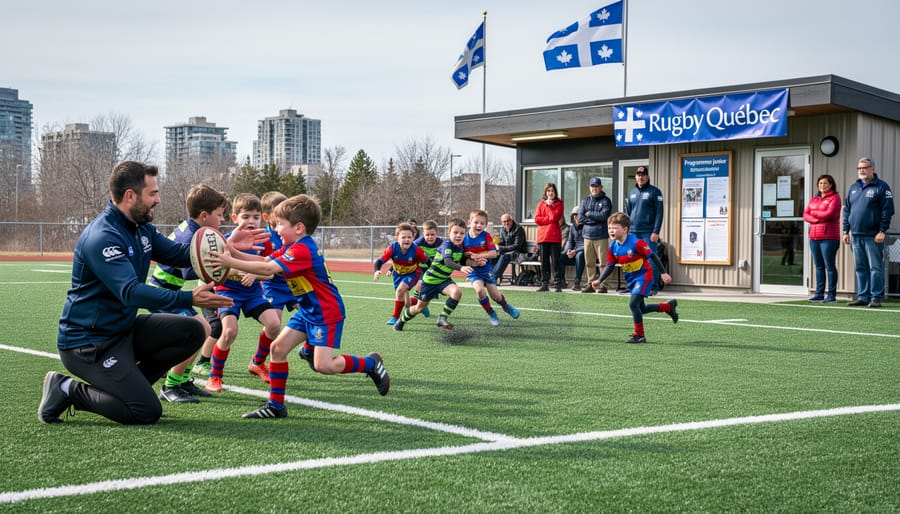
The numbers tell part of the story: Quebec now accounts for roughly 20% of Rugby Canada’s registered players while contributing significantly more than that percentage to national team rosters. Montreal alone hosts one of Canada’s largest concentrations of rugby clubs, with programs spanning ages five through senior levels. These clubs don’t just teach skills, they create pathways. Players who start in community programs like those run through Quebec Rugby now see a clear progression from mini rugby through age-grade provincial teams to national championships and, for the talented few, national team consideration.
The connection between what we’re building at the club level and opportunities with Team Canada has never been stronger. Young players in Quebec can now see themselves in that jersey because they’ve watched someone from their own club make that journey.
What sets Quebec apart isn’t just volume but intentionality. Quebec Rugby has invested heavily in coach education, creating French-language certification programs that removed language barriers and dramatically expanded the qualified coaching base. This matters because better coaches retain players longer and develop them more effectively. The province has also pioneered school-rugby partnerships, embedding programs in educational institutions where rugby competes directly with hockey and soccer for young athletes’ attention and time.
The women’s game deserves particular recognition. Quebec has become a powerhouse in women’s rugby development, with several provincial players earning national team caps and inspiring the next generation. Local tournaments now draw teams from across Eastern Canada, turning Quebec into a regional hub that elevates competition standards for everyone.
These provincial investments don’t just benefit Quebec, they strengthen Canadian rugby as a whole, creating the depth of talent that sustains competitive national teams.
What’s Driving Rugby’s Momentum in Canada
Several powerful forces are converging to push rugby forward across Canada, creating momentum that reaches from school fields to national development pathways.
Women’s rugby has exploded. Female participation has grown by over 40% in the past five years, driven by visibility from the Olympic Sevens program and grassroots initiatives making rugby accessible to girls who might never have considered traditional contact sports. This isn’t just about numbers, women’s programs are reshaping club culture, bringing families into the sport, and proving that rugby’s values of respect and teamwork resonate across all demographics.
Immigration patterns matter more than many realize. Canada welcomes significant populations from rugby strongholds like South Africa, Fiji, Ireland, and the Caribbean. These communities don’t just bring playing experience; they bring coaching knowledge, fan culture, and a deep understanding of what makes rugby special. Their children grow up hearing rugby discussed at dinner tables, creating a cultural foundation that traditional Canadian sports marketing can’t manufacture.
School programs have become the sport’s secret weapon. Rugby fits naturally into physical education curricula, it’s inclusive, teaches conflict resolution, and accommodates different body types better than basketball or ice hockey. Teachers see kids who struggle in other sports suddenly find their place on a rugby pitch. Once a school establishes a program, it tends to stick, creating sustainable pipelines rather than boom-bust cycles.
Coaching development has professionalized dramatically. Rugby Canada’s pathway programs now produce certified coaches who understand both the technical game and youth development principles. Better coaching means safer play, which reassures parents. It also means players progress faster, stay engaged longer, and develop the skills needed to compete internationally.
The diversity and inclusivity angle isn’t marketing speak, it’s lived reality. Rugby actively welcomes LGBTQ+ players, adaptive rugby programs serve athletes with disabilities, and the sport’s culture genuinely celebrates different backgrounds. In an increasingly diverse Canada, that authenticity attracts participants looking for communities that reflect their values.
These factors feed each other. Immigrant families connect with improving school programs. Better coaching retains the players those programs develop. Women’s visibility inspires the next generation. Together, they’re building something sustainable rather than fleeting, a foundation that national team success can amplify but doesn’t solely depend on.
Challenges Rugby Still Faces in Canada
Despite rugby’s momentum, real obstacles remain. Ice hockey, lacrosse and football dominate funding, facilities and mindshare across Canada. Many communities lack dedicated rugby pitches, forcing clubs to negotiate shared space with soccer leagues or play on substandard fields. Winter’s long grip shortens the season considerably, particularly outside British Columbia’s milder climate, pushing indoor training costs higher and limiting year-round development.
Resource gaps hit hardest at the community level. Volunteer coaches often juggle multiple roles without formal training support, and equipment costs can deter families new to the sport. Geographic spread compounds these challenges, talented players in smaller centres may travel hours for competitive matches, while rural areas struggle to form sustainable teams.
Public awareness remains rugby’s steepest climb. Most Canadians still view rugby as niche or overseas-focused, unfamiliar with the sport’s rules or local opportunities. Mainstream media coverage stays sparse outside World Cup cycles, meaning community clubs rely on word-of-mouth and social channels to attract new participants.
Yet each challenge opens doors for involvement. Facilities gaps create space for advocacy and creative solutions, pop-up pitches, school partnerships, multi-sport collaborations. Resource limitations invite mentorship, with experienced players coaching newcomers and clubs pooling knowledge. Geographic distances foster regional pride and tight-knit communities. Awareness gaps mean every conversation, every invited friend, every shared match becomes an opportunity to grow the game from the ground up.
So is rugby popular in Canada? The honest answer sits somewhere between emerging and established. While it hasn’t reached the heights of hockey or lacrosse, rugby’s growth trajectory tells a compelling story of steady expansion and deepening roots across the country.
The sport’s momentum is real. Participation numbers climb year after year, women’s programs flourish, and communities from coast to coast invest in pitches and coaching. National team developments fuel this cycle: international success inspires young players, who join clubs, develop skills, and eventually feed back into the talent pipeline that strengthens Canadian rugby on the world stage. It’s a reinforcing loop where grassroots energy and elite performance lift each other.
Canada’s rugby landscape in 2026 looks fundamentally different than it did a decade ago. The sport has carved out legitimate space in the national consciousness, particularly in provinces like Quebec where community dedication meets strategic development. But there’s still distance to travel before rugby becomes truly mainstream.
That’s where you come in. Every player who joins a club, every parent who encourages their child to try the sport, every volunteer who gives weekend hours, and every spectator who shows up on match day contributes to rugby’s continued rise. The sport’s future in Canada won’t be written by national organizations alone. It’ll be built pitch by pitch, community by community, by people who see rugby’s potential and choose to be part of making it happen. Your local club needs you.