
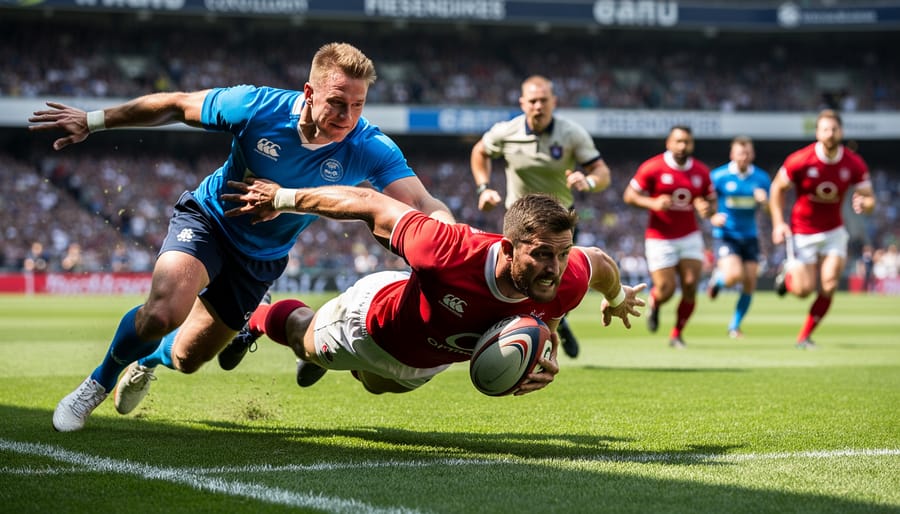
Ultimate Sevens Rugby is a new knockout tournament format that condenses traditional rugby sevens into 10-minute matches played in rapid succession, creating four hours of non-stop, high-intensity competition. Designed as what organizers call a “super-charged rugby experience,” this modern format strips away pool play and multi-day schedules in favor of straight elimination brackets where every match carries winner-take-all stakes.
For rugby fans accustomed to traditional sevens tournaments, where teams play multiple pool matches over two or three days before knockout rounds begin, Ultimate Sevens represents a significant departure. The format prioritizes speed and spectacle, compressing the tournament structure into a single event that delivers immediate consequences. There’s no safety net of pool standings or second chances. Lose once, and your day is done.
This shift matters for players, coaches, and supporters in Quebec’s rugby community because it signals how the sport continues to evolve and attract new audiences. The 2026 Ultimate Sevens Championship schedule features stops in Madrid on September 5th, Cardiff on September 12th, Biarritz on September 18th, and London on September 24th, with six clubs competing at each location. Both men’s and women’s teams participate equally in what promises to be a testing ground for format innovation in rugby sevens.
Understanding how Ultimate Sevens differs from traditional rugby sevens helps clarify whether this approach could influence local tournaments, player development pathways, and how we think about fast-format rugby in our own communities.
What Ultimate Sevens Rugby Means
Ultimate Sevens is a modern rugby format that compresses elite competition into a single, electrifying event. Instead of the traditional multi-day tournament structure familiar to rugby sevens fans, Ultimate Sevens delivers four hours of continuous action where the best teams face off in ten-minute matches decided through straight knockout competition.
This super-charged approach fundamentally reimagines how rugby sevens tournaments unfold. The inaugural 2026 championship features six clubs, each fielding both men’s and women’s teams, competing across four European cities from September 5 through September 24. Every match carries immediate consequences, there are no pool stages, no second chances, and no room for slow starts.
- Ultimate Sevens
- A condensed rugby sevens format that delivers four hours of non-stop, high-stakes competition in a single event, designed for maximum intensity and spectator engagement.
- Straight Knockout
- An elimination structure where teams are immediately removed from competition after a single loss, with no pool stages or second-chance brackets.
- Super-Charged Rugby
- The organizing body’s description of Ultimate Sevens as an intensified experience that compresses elite-level competition into short, decisive matches with immediate stakes.
- Ten-Minute Matches
- The core match duration in Ultimate Sevens, significantly shorter than traditional sevens formats, creating rapid-fire competition across the four-hour event.
The format strips away the familiar tournament rhythm and replaces it with relentless pacing. Teams don’t have days to recover, analyze opponents, or adjust tactics, they must bring their peak performance immediately and sustain it. This creates a completely different competitive environment from what players and fans experience at the World Rugby Sevens Series or other established tournaments, where teams play multiple matches across a weekend with built-in recovery periods.
How Ultimate Sevens Works
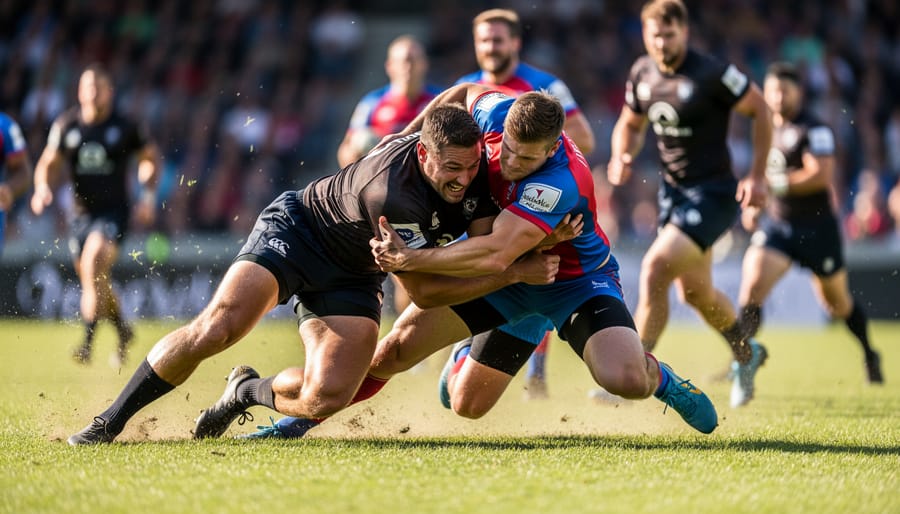
Ultimate Sevens strips away the multi-day pool format familiar to traditional sevens fans and replaces it with a single, relentless afternoon of knockout rugby. Each tournament runs for exactly four hours, during which every match is a ten-minute, winner-takes-all clash. There are no second chances, no pool standings to calculate, lose once and you’re out.
The format compresses the entire competition into one intense session. Teams arrive knowing they must win every match to reach the final, creating immediate stakes from the opening kick-off. The ten-minute match length keeps the pace ferocious: players sprint, score, defend, and leave everything on the pitch before the next pair of teams takes over. This continuous cycle means spectators watch match after match without the traditional breaks between pool rounds or lengthy wait times for knockout stages.
The core elements that define Ultimate Sevens include:
- Ten-minute matches with no pool phase
- Straight knockout progression from first whistle to final
- Four hours of continuous action in a single session
- Multi-city championship structure across four European venues
The 2026 championship demonstrates how this format unfolds across geography. The six clubs competing with both men’s and women’s teams will travel to four different cities over three weeks: Madrid on September 5th, Cardiff on September 12th, Biarritz on September 18th, and London on September 24th. Each event stands alone as a complete knockout tournament, but the series structure means clubs accumulate results across all four stops to determine an overall champion.
This city-hopping approach brings the competition to different rugby communities rather than anchoring it to one location, while the condensed timeframe keeps each event accessible to fans who want the full experience without committing to a weekend-long tournament.
Key Differences Between Ultimate Sevens and Traditional Rugby Sevens

Ultimate Sevens Rugby represents a fundamental shift in how sevens rugby is packaged and delivered to fans. While it builds on The Laws of Rugby that govern traditional sevens, the differences in format create an entirely different competitive experience.
Match Duration and Structure
Traditional sevens tournaments run matches of fourteen minutes (two seven-minute halves), with finals sometimes extending to twenty minutes. Ultimate Sevens cuts this to ten-minute matches across the board. This shorter format means faster turnarounds and more frequent scoring opportunities, compressing the intensity into an even tighter window.
Tournament Format
The World Rugby Sevens Series uses pool play followed by knockout rounds, spreading competition across two full days at each venue. Teams might play five to seven matches over a weekend, with recovery time between rounds.
Ultimate Sevens employs straight knockout from the first whistle. No pools, no second chances, lose once and you’re out. The entire tournament unfolds in four hours of continuous action at a single venue on a single day, creating a high-stakes atmosphere where every match is do-or-die.
Event Pacing and Rhythm
Traditional sevens tournaments feature natural breaks between sessions, allowing fans to arrive for specific pools or knockout rounds. The rhythm is punctuated, with distinct morning, afternoon, and evening sessions.
Ultimate Sevens delivers non-stop action. The four-hour format means fans experience the complete championship in one sustained burst, with matches flowing directly into one another. There’s no downtime, no waiting for evening finals, the entire competition arc happens in real time.
Competitive Intensity
This condensed knockout structure fundamentally changes preparation and strategy. Teams can’t afford slow starts or use early matches to build form. Every ten minutes demands peak performance from the opening kick-off, creating a super-charged competitive environment that tests both physical conditioning and mental resilience under continuous pressure.
Ultimate Sevens Tournament Components
Teams and Competition Structure
The inaugural Ultimate Sevens Championship brings together six clubs, each fielding both a men’s team and a women’s team. This dual-competition structure creates parallel tournaments running simultaneously throughout each event, doubling the action and ensuring equal prominence for men’s and women’s rugby.
Rather than traditional national sides, the club-based model mirrors franchise formats seen in other sports, allowing teams to build rosters specifically for this high-intensity knockout format. Each of the six clubs competes across all four European events, with both their men’s and women’s squads battling through the straight knockout brackets at every stop. This structure means twelve teams total take the field at each event, six men’s sides and six women’s, all vying for supremacy in ten-minute, winner-takes-all matches that demand tactical flexibility and squad depth across a condensed timeframe.
The 2026 Championship Schedule
The 2026 championship unfolds across four weekends in September, bringing the tournament to iconic rugby venues in four different European countries. Each event operates as a standalone championship day, with teams competing in the knockout format at each location before the series moves to the next city. This multi-city structure exposes the format to diverse rugby markets and creates distinct championship moments rather than a single tournament site.
The four events are:
- Saturday, September 5, 2026, Estadio Ontime Butarque, Leganés (Madrid), Spain
- Saturday, September 12, 2026, Cardiff Arms Park, Cardiff, Wales
- Friday, September 18, 2026, Parc des Sports Aguilera, Biarritz, France
- Thursday, September 24, 2026, Gtech Community Stadium, Brentford (London), UK
The schedule shifts from weekend slots in Madrid and Cardiff to weekday events in Biarritz and London, testing different audience patterns and broadcast windows. Each venue brings its own rugby heritage: Cardiff Arms Park’s deep sevens history, Biarritz’s status as a French rugby heartland, and London’s metropolitan reach. The compressed timeline, four events in twenty days, demands consistent performance from teams while building momentum across the championship series.
Where Ultimate Sevens Fits in Rugby Events and Player Experiences

For Players: High-Intensity Competition
The ten-minute match format and straight knockout structure create a relentless competitive environment unlike any traditional sevens tournament. Players face elimination pressure from the opening whistle, with no pool-stage safety net to recover from a slow start or early mistakes. Every possession matters when a single loss ends your day.
This condensed timeframe demands exceptional game management and decision-making under extreme fatigue. Players must maintain peak intensity across multiple matches within four hours, managing energy reserves while executing at full speed. The quick turnaround between knockout matches, with winners advancing immediately to the next round, tests mental resilience as much as physical conditioning.
The format rewards players who thrive under pressure and can adapt tactics rapidly between matches. Unlike traditional tournaments where teams might face weaker opponents in pool play, Ultimate Sevens delivers best-versus-best competition from the first match. This creates opportunities for emerging talent to prove themselves against top-tier opponents in high-stakes situations, accelerating development through intense competitive exposure that would take an entire season to accumulate in conventional formats.
For Fans and Community Engagement
The four-hour continuous format transforms Ultimate Sevens from a sporting event into a full entertainment experience. Fans arrive once and watch a complete tournament unfold from first whistle to final, with matches following in rapid succession and momentum building naturally toward knockout finals. This compressed timeline creates a festival atmosphere where spectators stay engaged throughout, rather than traditional multi-day tournaments that require multiple venue visits and break up the action across weekends.
For casual fans and newcomers to rugby, the format lowers barriers to entry. Ten-minute matches are digestible even for those unfamiliar with rugby’s complexities, while the knockout structure provides clear stakes in every game, there’s no confusing pool standings or qualification scenarios to track. The non-stop pace keeps energy high and prevents the lulls that sometimes lose casual viewers during longer formats.
The multi-city approach across Madrid, Cardiff, Biarritz, and London throughout September 2026 builds a travelling community of supporters and creates local engagement opportunities in each host city. Clubs can develop home followings while still competing on neutral ground, and the series format gives fans multiple chances to experience the championship without committing to distant travel for a single event.
What Ultimate Sevens Means for Quebec Rugby
Ultimate Sevens offers Quebec rugby a blueprint for energizing community engagement and player development through format innovation. The tournament’s condensed, high-intensity structure demonstrates how traditional rugby can evolve to meet modern audience expectations while maintaining competitive integrity, a lesson directly applicable to regional programs looking to grow participation and spectator interest.
For Quebec’s development pathway, the Ultimate Sevens model presents intriguing possibilities. The ten-minute knockout format creates multiple competitive opportunities within a single event window, allowing more players to experience high-stakes matches without the logistical burden of multi-day tournaments. This structure could inspire local festivals that showcase emerging talent alongside established teams, making rugby more accessible to time-constrained players and families.
The format also addresses a persistent challenge in rugby development: creating enough meaningful game time. While Canada’s men’s sevens team competes internationally in traditional formats, regional programs struggle to provide sufficient match exposure. Ultimate Sevens’ rapid-fire approach could inform youth and club tournaments that maximize playing minutes and competitive intensity within compact timeframes.
Beyond the field, the four-hour entertainment package demonstrates rugby’s potential as a spectator-friendly product. Quebec rugby organizers could adapt this approach, shorter matches, knockout drama, continuous action, to attract new audiences at local events, helping the sport compete for attention in a crowded recreational landscape while staying true to rugby’s core values.
How Ultimate Sevens Rugby Format Rules Is Used
The Ultimate Sevens format serves rugby development in several concrete ways. Tournament organizers and national unions can use it as a compressed showcase event that fits into crowded calendars without requiring week-long commitments. The four-hour window makes it feasible to stage multiple events across different cities in quick succession, as the 2026 championship demonstrates with four European stops in three weeks.
Rugby development programs benefit from studying this format’s intensity and pacing. Coaches can adapt the ten-minute match structure for training sessions that simulate high-pressure decision-making under fatigue. The straight knockout design teaches players to perform under elimination stakes, preparing them for crucial tournament moments.
For emerging rugby markets, the format offers an accessible entry point. The condensed timeframe lowers venue costs and logistical complexity compared to traditional multi-day tournaments. This makes it easier for regions experiencing rugby’s rise in Canada to host or replicate similar high-energy events that attract new fans without overwhelming local resources.
Broadcasters and sponsors find value in the guaranteed four-hour broadcast window and predictable scheduling, creating opportunities for consistent viewer engagement and commercial partnerships that support rugby growth at multiple levels.
Common Questions About Ultimate Sevens Rugby
What is Ultimate Sevens Rugby?
Ultimate Sevens is a modern rugby format designed to deliver four hours of non-stop action through ten-minute matches in a straight knockout structure. Six clubs compete with both men’s and women’s teams across multiple European cities in short, high-stakes events.
How is Ultimate Sevens different from traditional rugby sevens?
Unlike the World Rugby Sevens Series, which runs matches over multiple days with pool rounds, Ultimate Sevens condenses everything into four hours of continuous knockout competition. The matches are ten minutes long, and the entire tournament unfolds in a single intense session rather than a weekend-long format.
How long are Ultimate Sevens matches?
Each match lasts ten minutes, creating rapid-fire competition where teams must execute immediately. This shorter duration compared to traditional sevens creates higher intensity and leaves no room for slow starts.
Where can I watch Ultimate Sevens in 2026?
The 2026 championship features four events: Madrid on September 5th, Cardiff on September 12th, Biarritz on September 18th, and London on September 24th. Fans can attend live at these venues across Europe to experience the four-hour competition format.
These questions reflect what most people new to Ultimate Sevens want to know right away. The format’s condensed nature makes it accessible for fans who might find traditional two-day tournaments harder to commit to, while the knockout structure guarantees every match carries real stakes from the opening whistle.
For Quebec rugby players and coaches considering how this format might influence local development, the key takeaway is that Ultimate Sevens prioritizes decision-making speed and relentless pace over endurance across multiple rounds. That could shape how you approach conditioning and game-day preparation in your own programs.
Ultimate Sevens represents an exciting evolution in rugby, pushing the boundaries of what competitive sevens can be. By compressing the best-versus-best competition into four hours of non-stop knockout action, this format creates something genuinely new, a spectacle that intensifies both the athletic challenge and the spectator experience. For players, it offers a proving ground unlike traditional tournaments. For fans, it delivers edge-of-your-seat drama from first whistle to final.
The 2026 championship across Madrid, Cardiff, Biarritz, and London will test whether this super-charged approach resonates with audiences and athletes alike. If it succeeds, the ripple effects could reach far beyond Europe. For the Quebec rugby community, Ultimate Sevens offers valuable lessons in innovation, how a sport can reimagine its format to attract new audiences while staying true to its core. Whether you’re a coach looking for fresh tactical ideas, a player curious about different competitive structures, or a supporter who loves the game, this format is worth watching.
Follow the inaugural season. See what works. Bring those insights home to grow rugby in Quebec.