

Getting started in Minnesota rugby union takes about a week of groundwork and one visit to a local club. Find a team near you, confirm they welcome beginners, show up to a training session in comfortable athletic clothes, and ask for a trial run before you buy any gear. Most clubs will put you through basic skills first: passing, running lines, and learning how to tackle safely. No experience required, and you don’t need to be fast, big, or young.
Rugby union is a team sport of continuous play, where two sides of fifteen try to carry, pass, and kick the ball over the opposing line. It’s often called a game for every body type, because a quick winger and a powerful prop both have a job to do. That openness is why clubs everywhere, from city pitches to small-town fields, are full of people who walked in as strangers and stayed for the friendships.
Not everyone wants to pull on boots, and that’s fine. Clubs rely on referees, coaches, volunteers, and supporters who keep match days running. This guide covers what you need, how to stay safe, how to join step by step, and how to tell you’re making progress, so you can find your place in the game with confidence.
What Rugby Union Is and Why Minnesota’s Community Welcomes Newcomers
Rugby union is a team game played with 15 players on each side, and the basic idea is easy to grasp. You carry the ball forward, but you can only pass it backwards or sideways. That means nobody advances alone. Every gain comes from teammates running support lines, offloading at the right moment and trusting each other. If you want the full detail, the Rugby union ball laws explain how the ball can be played, but you don’t need to memorize anything before your first session.
What makes the sport special is its culture. Respect for referees, opponents and teammates sits at the heart of the game, and sportsmanship doesn’t end at the final whistle. Many clubs share a meal or a chat after the match, and that tradition says a lot about who rugby people are.
Rugby has taken root in cold-weather regions around the world, and Quebec’s long rugby history is a good example of how a sport can thrive through winters and short seasons. Local clubs grow the same way everywhere: neighbours show up, friends bring friends, and the community builds the team. That’s the spirit behind an inclusive rugby community, where people of all backgrounds and skill levels are welcome.
And you don’t have to play to belong. Clubs rely on coaches, referees, volunteers, team managers and supporters on the sideline. Whatever brings you to the pitch, there’s a place for you in the game.

What You Need Before Your First Session: Gear, Gear Checks and Basic Preparation
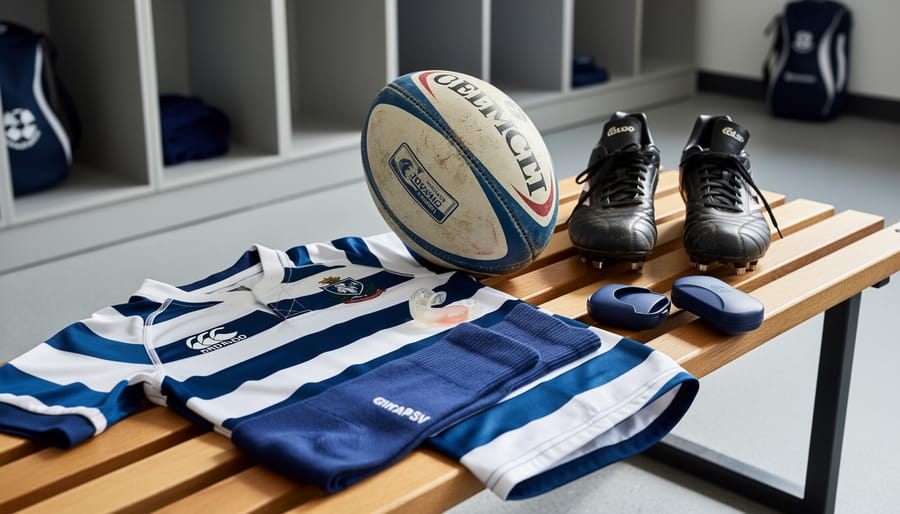
You don’t need a full kit bag to get started. Most clubs ask newcomers to hold off on big purchases until they’ve tried a session or two, and many will lend equipment for introductory nights. A quick message to the club before you turn up will tell you exactly what’s expected, and it’s a good way to introduce yourself.
Here’s a simple checklist of essentials:
- A mouthguard, because it protects your teeth and helps cushion impacts to the jaw.
- Cleats or turf shoes, whichever the club advises for its pitch, so you have grip when you run and turn.
- Shorts and a durable top that can handle a bit of tugging without ripping.
- A water bottle, since staying hydrated keeps you sharp and helps prevent cramping.
- Weather layers, like a warm jacket or rain shell, for the cool-down and the walk back to your car.
- A positive attitude, which counts for more than any piece of gear.
Think about why each item matters. A mouthguard is the single most important purchase, and a basic boil-and-bite version is an affordable place to start. Footwear affects both safety and confidence, so ask the club before buying anything, as the right choice depends on the surface. Layers matter in a place where evenings can turn chilly fast, because staying warm between drills keeps muscles ready.
Beyond gear, a little basic preparation goes a long way. Eat something light a couple of hours beforehand, arrive a few minutes early, and tell the coach it’s your first time. Everyone started where you are, and clubs love welcoming new faces.
Staying Safe: Rules, Warnings and When to Sit Out
Rugby is a physical game, and the best way to enjoy it for years is to build up slowly. If you’re new, ask your club about non-contact or touch formats first. These let you learn passing, running lines and positioning without the impact of full tackling, so you can pick up the rhythm of the game before adding contact.
When you’re ready to tackle, learn it only from qualified coaches who teach safe technique: head to the side, shoulder low, eyes up, arms wrapped. Practicing on tackle bags and in controlled drills beats trial and error on a live pitch. Reading the safe play rules before your first session also helps you understand what’s allowed and why those limits exist. If you want to understand the bigger picture around head injuries, this overview of CTE & player safety explains why clubs take them so seriously.
Prepare your body, too. Warm up properly before every session, with light jogging, dynamic stretches and some gentle passing. Drink water before, during and after training, and dress for the weather. Cold evenings call for layers you can shed as you heat up, while hot days mean more frequent water breaks and shade when you can find it.
Tell your coach about any injury, health condition or niggle, even a small one. Coaches can adjust drills, but only if they know. Sitting out for a session is far better than missing a season.
Finally, respect is part of safety. Listen to the referee, accept decisions without argument, and treat opponents as partners in the game. Rugby’s culture of sportsmanship keeps everyone on the pitch safer.

Step-by-Step: From Curious Newcomer to Active Club Member
Not Ready to Play? Ways to Be Part of the Game Off the Field
Rugby doesn’t begin and end with the players on the pitch. Every match you’ve ever enjoyed depended on people who never touched the ball, and clubs across Quebec, Minnesota and beyond lean on them daily. If running and tackling isn’t for you right now, there’s still a real place for you.
Think about who keeps a club alive. Coaches turn nervous beginners into confident players. Referees keep the game safe and fair. Team managers sort out kit, travel and fixtures. Volunteers run the barbecue, mark the lines and carry the tackle bags. Photographers capture the moments families treasure, and sponsors help cover the costs that keep fees low. Then there’s the sideline crowd, whose noise on a cold morning means more than they realize. This is the inclusive spirit behind Quebec Rugby’s mission: the game belongs to everyone who loves it.
Many clubs also offer training for new coaches and officials, so you don’t need a playing background to get started. Here’s a simple way to find your role:
- Find your state or regional rugby union and the local clubs listed under it.
- Contact a club and ask whether they run beginner or “come and try” sessions, or need helpers.
- Attend a first session and watch, or join the non-contact drills.
- Learn the basics of passing, catching and running lines, even if you’re only coaching or refereeing.
- Complete any registration and safety requirements the club asks for.
- Join social events and get to know your teammates and fellow volunteers.
- Progress to touch or contact formats, or take on a bigger off-field role, at your own pace.
Whichever route you choose, you’ll find a welcome waiting. Every role strengthens the community, and a friendly face on the sideline is often what makes a newcomer come back for a second week.
Checking Your Progress and Planning Your Next Steps
Once you have been to a few sessions, take a moment to check in with yourself. You’re on track if you can pass the ball backwards to a teammate without thinking too hard, and if the main rules (the forward-pass rule, what a tackle is, how play restarts) are starting to make sense. Just as important, ask whether you feel welcomed. Do people learn your name? Do coaches answer your questions patiently? A good club makes newcomers feel like part of the group within a few weeks. It also helps to be clear on the routine: when training happens, what to bring, and who to message if you can’t make it.
If those boxes are ticked, pick a next goal that suits you. Watch a full match as a spectator and see how the rules play out in real time. Try a coaching or referee course, which many clubs and unions support for beginners. Or bring a friend along to a welcoming session, because rugby grows one invitation at a time. Learning about rugby’s journey in Quebec shows how much this sport owes to ordinary people who simply showed up and made room for others.
Common Questions From First-Time Rugby Newcomers
Starting something new always raises questions, and rugby is no exception. Here are the ones newcomers ask most often, with honest, reassuring answers.
Do I need any experience to start?
No. Clubs welcome complete beginners, and introductory sessions are built around learning the basics of passing, running and teamwork from scratch.
Is rugby safe for adults and youth?
Rugby carries real physical contact, so safety comes from good coaching, age-appropriate formats and starting with non-contact or touch versions. Tell your coach about any health concern and learn tackle technique only from qualified coaches.
What age can I start, and do I need to be athletic?
Many clubs offer programs for different age groups, and plenty of adults begin later in life. You don’t need to be athletic, because the game has roles for different body types and fitness levels, and fitness builds with training.
What if I only want to volunteer or officiate?
That’s a great way to be part of the game. Clubs rely on coaches, referees, managers and helpers, and many offer training for people taking those roles for the first time.
As for finding a club, a good starting point is your regional or state rugby governing body, which typically lists affiliated clubs. You can also search online for clubs near you and message them directly. Most are happy to hear from newcomers and will point you toward the next introductory session. When you reach out, mention whether you want to play, coach, referee or simply help, and say whether you’re a total beginner. Clubs would much rather know than guess, and it helps them put you in the right group on day one.
Don’t let nerves talk you out of that first message. Every experienced player was once standing at the edge of a training pitch wondering the same things you are now.
The hardest part of rugby is rarely the game itself. It’s the moment before the first session, when you wonder whether you’ll fit in. Here’s the good news: you will. Every club was built by people who once stood on the touchline feeling just as unsure as you do now.
So pick a club near you and send that first message. Ask about a no-contact introductory session, mention that you’re brand new, and see how quickly people make room for you. Whether you end up playing, coaching, refereeing, volunteering or simply cheering from the sideline, there’s a place waiting.
Rugby’s values of respect, inclusivity and sportsmanship aren’t slogans. They’re how the community works, from Minnesota to Quebec and everywhere in between. Take it one pass at a time, stay safe, and enjoy the people around you. The wider rugby family is ready to welcome you. All that’s left is to say hello.