
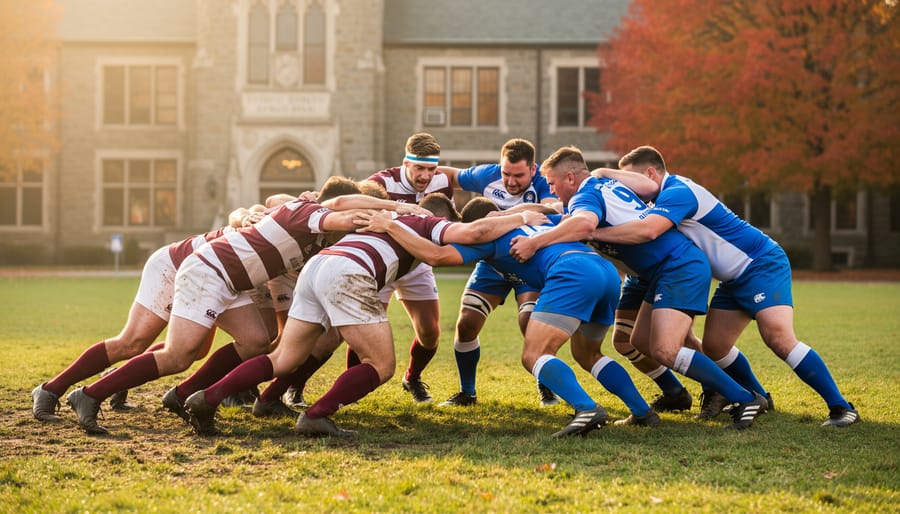
The legend begins in 1823 at Rugby School in England, where a student named William Webb Ellis supposedly picked up the ball during a football match and ran with it, breaking the rules and birthing an entirely new sport. While historians debate whether this exact moment truly happened, what remains undeniable is that rugby as we know it crystallized in those English schoolyards during the 1800s, forever changing the landscape of team sports worldwide.
From those humble origins, rugby spread across continents, reaching Canada’s shores in the 1860s and eventually taking root in Quebec’s tight-knit communities. The sport’s journey from a spontaneous act of rebellion to an organized game embraced by millions reflects its core values: courage, respect, and solidarity. Today, when Quebec rugby players take the field, they carry forward nearly two centuries of tradition, adapting this English invention into something uniquely their own. Understanding where rugby came from helps us appreciate not just the game’s rules and structure, but the spirit of innovation and community that continues to drive its growth across our province.
The Birthplace of Rugby: A Game Born from Legend
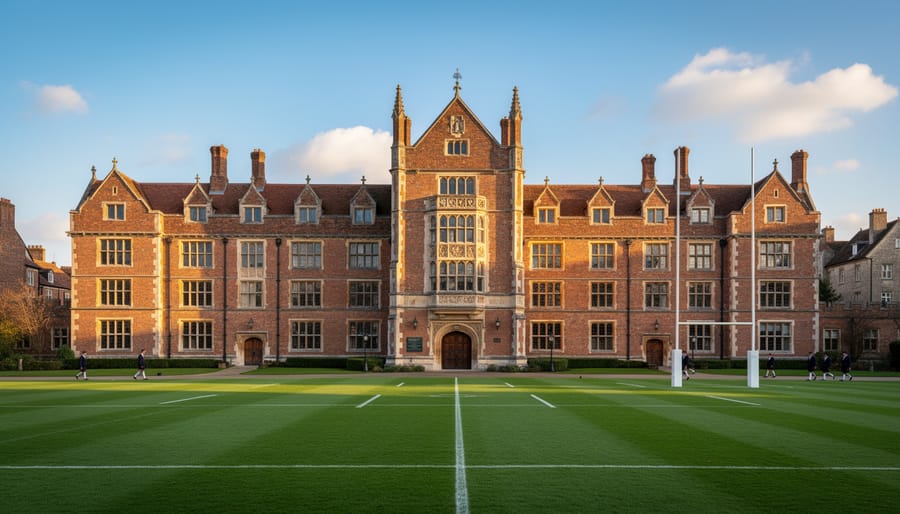
William Webb Ellis and the Famous Story
In 1823, a moment occurred at Rugby School in England that would become one of sport’s most enduring legends. According to the story, a young student named William Webb Ellis, during a football match, caught the ball and made an unexpected choice—he picked it up and ran toward the opposing goal line. This spontaneous act of rule-breaking supposedly gave birth to the game we now call rugby.
While this tale has been passed down through generations, historians have debated its accuracy for years. No concrete evidence from 1823 confirms Ellis actually did this, and some scholars suggest the story may have been embellished or even created decades later to give rugby a romantic origin story. What we do know is that Webb Ellis was a real student at Rugby School, but whether he was truly rugby’s founding father remains a beautiful mystery.
Regardless of historical precision, this story holds tremendous cultural significance. It represents the spirit of innovation and courage that defines rugby—the willingness to break from convention and create something new. The Rugby World Cup trophy bears Webb Ellis’s name, honoring not just one person, but the legendary moment that symbolizes how sports evolve through creativity and bold action. For Quebec’s rugby community, this story reminds us that every great tradition starts somewhere, often with someone daring to do things differently.
From Schoolyard to Global Phenomenon
After William Webb Ellis’s legendary moment at Rugby School, the game quickly captured the imagination of students across England. By the 1840s and 1850s, rugby had spread to other prestigious schools like Eton, Harrow, and Marlborough, each developing their own variations of the rules. When these students moved on to universities, particularly Oxford and Cambridge, they brought rugby with them, establishing the first university clubs and competitions.
The real transformation came in 1871 with the formation of the Rugby Football Union in England, which standardized the rules and organized the first international match between England and Scotland. This pivotal moment launched rugby’s journey beyond its birthplace.
The British Empire became the vehicle for rugby’s global expansion throughout the mid-to-late 1800s. British soldiers, merchants, and colonists introduced the sport to far-flung territories. By the 1870s, rugby had reached Australia, New Zealand, and South Africa, where it took root with remarkable enthusiasm. The sport also crossed the Atlantic to Canada, arriving in Montreal in the 1860s, where it would eventually flourish in communities like Quebec. What began as a schoolyard game had transformed into an international phenomenon, connecting people across continents through shared passion and competition.
Rugby’s Journey Across the Atlantic
Rugby’s Atlantic crossing began in earnest during the mid-to-late 1800s, carried across the ocean by British military personnel, settlers, and students who brought their beloved sport to Canadian shores. What started as informal matches among garrison soldiers soon blossomed into organized competitions that would shape the sporting landscape of a young nation.
Montreal became the cradle of Canadian rugby, hosting the country’s first recorded match in 1864. The Montreal Football Club, established in 1868, stands as the first organized rugby club in North America, predating American football itself. British immigrants and military officers stationed in cities like Montreal, Toronto, and Halifax introduced the game to local communities, where it quickly captured the imagination of Canadians eager to embrace this exciting team sport.
Universities played a transformative role in rugby’s Canadian story. McGill University in Montreal became a pioneering force, with students not only playing rugby but also adapting and evolving its rules. The famous 1874 matches between McGill and Harvard University demonstrated rugby’s cross-border appeal and actually influenced the development of American football. Other institutions, including the University of Toronto and Queen’s University, soon established their own rugby programs, creating rivalries that energized campus life and introduced generations of students to the sport.
By the 1880s, rugby clubs had sprouted across Ontario, Quebec, and the Maritime provinces, bringing together people from diverse backgrounds united by their passion for the game. These early Canadian rugby communities created spaces where newcomers and established residents could connect, compete, and celebrate together. The sport’s emphasis on teamwork, respect, and physical challenge resonated deeply with Canadian values, establishing rugby as more than just a game but a shared cultural experience that continues today.
How Rugby Planted Its Roots in Quebec
The Early Days: Quebec’s First Rugby Clubs
As rugby fever spread across the British Empire in the late 1800s, Quebec became one of the earliest adopters of the sport in North America. The province’s first rugby clubs emerged during a period of cultural exchange and athletic enthusiasm, bringing together diverse communities united by their passion for this new and exciting game.
The Montreal Football Club, established in 1868, holds the distinction of being one of North America’s oldest documented rugby organizations. English and Scottish immigrants, many of whom had played the game in their homeland, championed its introduction to Quebec soil. These early pioneers faced significant challenges, from securing appropriate playing fields to sourcing proper equipment in an era when even rugby balls had to be imported from England.
By the 1880s, several clubs had taken root across Quebec, particularly in Montreal and Quebec City. McGill University became a crucial hub for the sport’s development, with students and faculty forming teams that would compete against local clubs and military regiments stationed in the region. These matches often drew curious crowds, introducing Quebec’s broader population to rugby’s unique blend of strategy, skill, and teamwork.
The early clubs operated with limited resources but boundless enthusiasm. Organizers volunteered countless hours to arrange fixtures, maintain grounds, and promote the sport. Their dedication laid the foundation for what would become a thriving rugby community, demonstrating that passion and perseverance could overcome any obstacle.
Building Community Through Rugby
While rugby’s roots trace back to an English schoolyard in 1823, the sport’s true power lies in its ability to unite people across boundaries. In Quebec, rugby has evolved far beyond the playing field to become a remarkable force for community building and cultural exchange.
The province’s unique bilingual character has positioned rugby as a bridge between francophone and anglophone communities. Local clubs routinely bring together players from diverse linguistic backgrounds, creating spaces where communication happens through shared passion rather than language barriers. Weekend matches often feature teams where French and English blend naturally, reflecting Quebec’s multicultural reality.
Rugby’s core values of respect, discipline, and teamwork resonate deeply within Quebec’s immigrant communities as well. Many clubs actively welcome newcomers from rugby-playing nations across Africa, Europe, and the Pacific Islands, offering not just a familiar sport but a pathway to social integration. These connections help families establish roots while sharing their rugby traditions with Canadian-born players.
Youth programs have become particularly transformative, introducing children to teammates they might never meet in their regular schools. Parents gathering on sidelines form friendships that extend beyond rugby, creating support networks that strengthen entire neighborhoods. Coaches often speak of how the sport teaches young Quebecers lessons about inclusion and cooperation that classroom settings cannot replicate.
Through festivals, tournaments, and social events, Quebec’s rugby community continues to demonstrate that sport can transcend cultural divisions, building lasting connections that enrich the entire province.
The Values That Traveled with the Game
When William Webb Ellis picked up that ball at Rugby School in 1823, he unknowingly set in motion more than just a sport. He sparked a movement built on principles that would travel across oceans and generations, finding a remarkable home in communities like Quebec.
Rugby’s core values—respect, integrity, solidarity, discipline, and passion—weren’t added later as marketing slogans. They emerged organically from the game itself. The tradition of players sharing a meal after matches, regardless of who won, taught respect. The honor system of self-refereeing in early games demanded integrity. The scrum, where eight players bind together as one unit, exemplified solidarity. The physical and mental demands required discipline. And the raw emotion of the game embodied passion.
These values crossed the Atlantic with British soldiers, settlers, and students who brought rugby to Canadian soil in the 1860s. In Quebec, they found fertile ground. The province’s multicultural fabric and community-oriented spirit aligned perfectly with rugby’s inclusive ethos.
Today, Quebec Rugby carries these historic values forward with purpose. When young players in Montreal join their first team, they learn the same lesson taught at Rugby School nearly two centuries ago: leave everything on the field, then shake hands and break bread together. When coaches in Quebec City teach proper tackling technique, they emphasize discipline and safety. When diverse communities across the province unite on rugby pitches, they practice solidarity in its purest form.
These aren’t abstract ideals. They’re lived experiences that transform participants. Parents share stories of shy children finding confidence through rugby. Coaches witness former rivals becoming lifelong friends. Communities discover common ground through shared passion for the game.
Quebec Rugby’s mission reflects this heritage—developing not just skilled players, but respectful citizens who carry rugby’s values beyond the pitch. It’s a legacy that connects a boarding school in England to every rugby field in Quebec, proving that the most important thing William Webb Ellis set in motion wasn’t the ball, but the values that traveled with it.

Quebec Rugby Today: Honoring the Past, Building the Future
From those fog-covered fields in Rugby, England, to the vibrant pitches across Quebec today, the sport’s journey has been remarkable. Understanding rugby’s origins helps us appreciate not just the game itself, but the values that have sustained it for nearly two centuries: respect, camaraderie, and the spirit of fair play.
Today, Quebec Rugby stands as a proud guardian of this rich heritage while actively shaping the sport’s future in our province. We honor the traditions passed down from William Webb Ellis and those early pioneers, while adapting rugby to reflect our diverse, modern community. Every scrum, every tackle, and every try scored on Quebec soil carries forward that legacy of innovation and passion.
Our organization is committed to making rugby accessible to everyone, regardless of age, background, or experience level. From youth development programs that introduce children to the fundamentals, to competitive leagues that challenge seasoned players, we’re building a rugby community that welcomes all who share our love for the game. We celebrate the success stories emerging from communities across Quebec, where local clubs are becoming gathering places that strengthen neighborhoods and create lifelong friendships.
Quebec’s rugby scene thrives because we understand that the sport is more than competition. It’s about building character, fostering inclusion, and creating opportunities for personal growth. As we look toward the future, we’re investing in coaching education, improving facilities, and expanding outreach to underserved communities. By connecting our present efforts to rugby’s storied past, we’re ensuring that the next generation of Quebec players will carry forward both the sport’s traditions and our province’s unique contributions to its ongoing story.
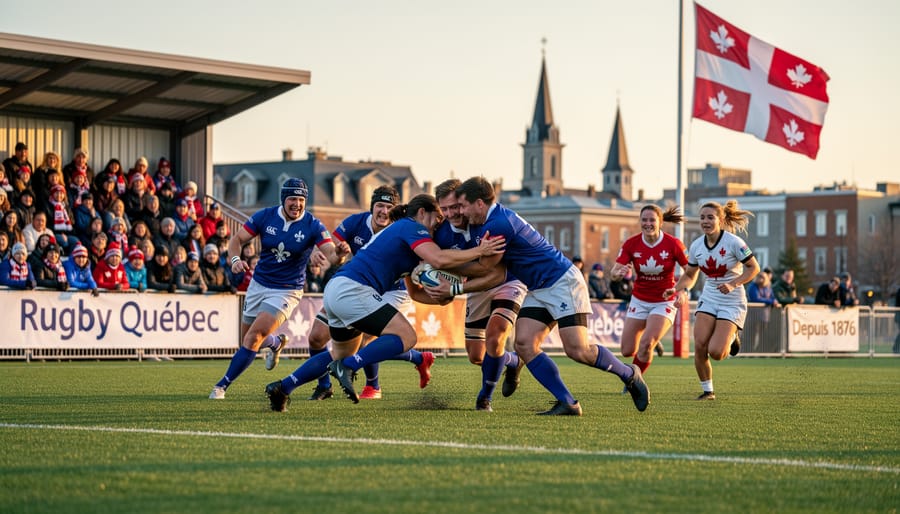
From the schoolyard of Rugby School in England to the vibrant fields and clubs across Quebec, rugby’s journey is one of remarkable transformation and enduring values. What began as a spontaneous moment in 1823 has evolved into a sport that truly reflects the spirit of our communities here in Quebec—celebrating diversity, fostering respect, and building connections that extend far beyond the pitch.
The story of rugby’s origins reminds us that great movements often start with a single bold action, much like the strides our Quebec rugby community continues to make today. Our province has embraced this storied sport and made it our own, weaving it into the fabric of our local culture while honoring the traditions that came before us.
Whether you’re a seasoned player, an aspiring coach, a dedicated official, or someone curious about getting involved, there’s a place for you in Quebec’s rugby family. Every training session, every match, and every volunteer hour contributes to this continuing story. We invite you to step onto the field, support from the sidelines, or help grow the game in whatever capacity speaks to you. Together, we’re not just playing rugby—we’re building a legacy of community, passion, and shared values that will inspire generations to come.