

Solid-phase peptide synthesis, a method used by labs and companies such as Kylo Peptides builds a small protein chain one piece at a time while the growing chain stays anchored to a tiny solid bead, so each step can be washed clean without losing your work. That’s the whole idea. It’s patient, repetitive, and surprisingly easy to picture once you see it as a team sport.
Think of the definition of rugby: a game of phases, where a team moves the ball forward through many short, disciplined efforts rather than one miracle run. Peptide building works the same way. Each amino acid is a player added to the line, each phase is secured before the next begins, and the bead acts like the touchline, holding everything in place while the field is cleared between plays.
This approach is why research labs can produce chains reliably and repeat them with confidence. Chemists have used it for decades, and it’s taught in university programs across Quebec and beyond.
In this guide, you’ll get a plain-English look at the materials involved, the safety mindset that trained labs bring, the ordered stages of the process, and how scientists verify the finished chain. It’s conceptual, not a lab protocol, and anyone curious can follow along, whether you’re a coach, a supporter, or a player who just wondered how the science works.
What Solid-Phase Peptide Synthesis Is and Why Scientists Use It

The Team Analogy: Building a Peptide One Pass at a Time
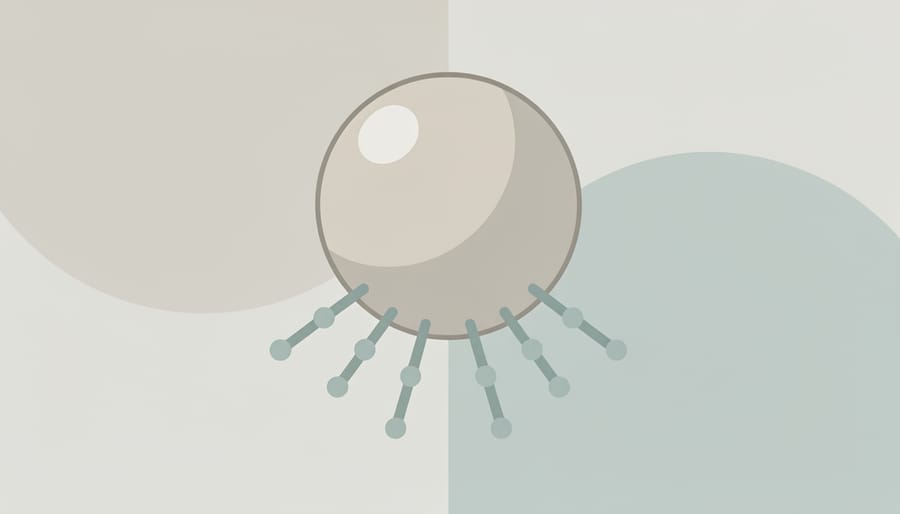
Picture the resin bead as the pitch. It stays put, and everything else happens on it. The amino acids are your players, and the first one is already standing on the pitch, firmly anchored, like a fullback who never leaves the 22.
Each new amino acid arrives with a bit of “tape” on it, which is what scientists call a protecting group. The tape stops a player from acting too early. Without it, players would grab the ball out of order and the whole move would fall apart.
Once a player is in position, the tape comes off, and the next player steps up to link in. Then comes the reset. The pitch is washed clean of any stray players who didn’t join the move, so the team is ready for the next phase.
Phase by phase, the chain grows. Nobody leaves the pitch until the final whistle, and every pass happens in a set order. That’s the idea behind building a peptide one pass at a time.
Tools and Materials You Would Find in a Peptide Lab
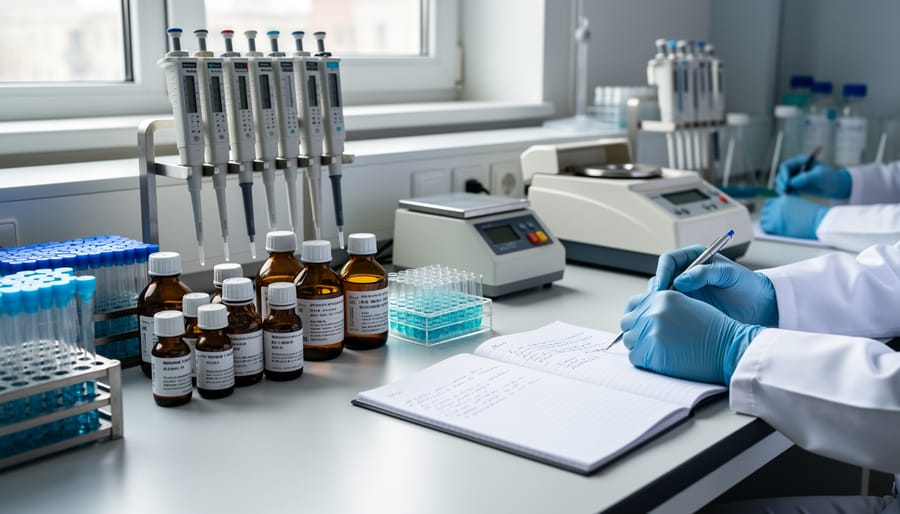
Before the first amino acid is ever added, a peptide lab has to be set up like a well-run clubhouse before match day: every role covered, nothing improvised. Here’s the cast list, explained conceptually, and strictly as a picture of how trained professionals work.
- Resin beads and linkers: the tiny solid “pitch” that holds the growing chain in place, with the linker acting as the anchor point that can be released at the end.
- Protected amino acids: the “players,” each wearing a protective cap so they only join the chain when it’s their turn.
- Coupling reagents: the helpers that encourage each new amino acid to connect firmly to the chain.
- Deprotection solutions: the step that removes the temporary cap so the next player can join.
- Washing solvents: the reset between phases, rinsing away anything that didn’t join the chain.
- Reaction vessels or automated synthesizers: the containers, or machines, where the whole cycle happens in a controlled, repeatable way.
- Cleavage reagents: the final release that frees the finished peptide from the bead.
Why does each piece matter? Because the method depends on consistency. Skip the washing, and leftovers contaminate the next step. Use poorly protected building blocks, and the chain can grow in the wrong order. Just as a try-scoring move falls apart if one player breaks the pattern, a peptide’s quality depends on every stage doing its job.
Many modern labs now use automated synthesizers, which repeat the cycle precisely and free up scientists to focus on planning and quality checks. Whether done by hand or by machine, though, this is professional work carried out in qualified, regulated spaces with proper training and equipment. Think of this list as a tour of the clubhouse, not a shopping list for a home project.
Safety Warnings: Why This Work Belongs in a Trained Lab
Peptide synthesis might sound gentle when explained with rugby analogies, but the real work involves some serious chemistry. Professionals handle strong acids and organic solvents that can irritate skin, harm the lungs, and cause lasting damage if mishandled. That’s why proper labs rely on fume hoods and good ventilation, protective gloves, goggles and coats, and staff who’ve been trained to spot problems before they start. Even the leftovers matter. Used solvents and chemical waste need careful, regulated disposal, not a trip down the drain.
Think of it like the difference between a casual kickabout and a sanctioned match. One has referees, medical staff, and rules to protect players. The other leaves everyone guessing. Peptide synthesis belongs firmly in the first camp: qualified, regulated settings only, and never a home project.
Player welfare is the heart of this. Many peptide products marketed to athletes are unverified, which means what’s on the label may not match what’s in the vial. Some peptides also appear on prohibited lists, and a positive test can end a season. If you’re curious about how sport bodies treat substances, our rundown on whether is CBD banned shows how quickly the rules can catch people out. For everyday protection on the pitch, our safety guide is a good place to start. When in doubt, ask your club doctor and check with your governing sport body first.
Step-by-Step: How a Peptide Is Built on the Bead
Two Common Approaches: Fmoc and Boc in Plain English
Think of protecting groups as tape on a player’s wrists. The tape tells that player to hold position until the right moment, when the tape comes off and they can join the move. Fmoc and Boc are two different brands of tape, and each one comes off in its own way.
Boc is the older approach. It relies on stronger conditions to release the tape at each step, so it asks more of the equipment and the people running it. Fmoc came later and is widely used today because its tape releases under gentler conditions, which keeps the growing chain happier and makes the process easier to manage. Many labs now run Fmoc on automated synthesizers that repeat the cycle on their own, much like a well-drilled side running phases without the coach calling every pass.
Whichever tape a lab chooses, the overall rhythm of the build stays the same:
- Anchor: The first amino acid is attached to the resin bead, which gives the chain a fixed starting point.
- Deprotect: The tape comes off the newest amino acid so it is ready to receive the next one.
- Couple: The next taped amino acid is added and linked onto the end of the chain.
- Wash: Leftover material is rinsed away while the chain stays safely on the bead.
- Repeat: The deprotect, couple and wash steps run again for every amino acid in the sequence.
- Cleave: Once the chain is complete, it is released from the bead and the remaining tape is removed.
- Collect the crude peptide: The freed product is gathered, ready for purification and testing.
That predictable loop is what makes the method so reliable and so well suited to automation.
Checking the Result: Purification, Testing and What Comes Next
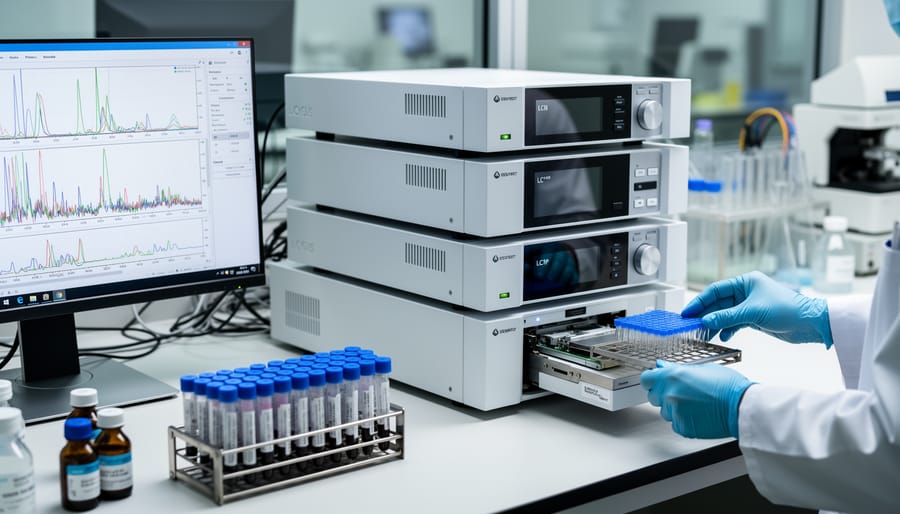
When the last step is done and the peptide is cut free from its bead, the job isn’t finished. What comes off is a crude product, a mix of the peptide you wanted plus shorter or slightly altered chains that formed along the way. Think of it as the raw footage from a match: the result is in there somewhere, but you’d never publish it without a proper review.
That review starts with purification. The usual tool is HPLC, which separates the mixture so the target peptide can be collected on its own, much like a referee sorting out which players belong to which side. Then comes testing. Mass spectrometry weighs the molecule with remarkable precision, confirming that what you made matches what you set out to make. Purity checks tell you how much of the final sample is the real thing.
These quality checks matter because a peptide is only as useful as it is trustworthy. A research team, a clinic or a sports scientist needs to know the product is the right molecule at the right purity, not a near miss that looks similar on paper.
Once verified, peptides move on to research labs, medicine and sports science, where they help scientists understand how the body works and how it recovers. If this has sparked your curiosity, reputable science education sites, university outreach pages and public health resources are great places to keep learning, and your club can explore them together.
Common Questions About Solid-Phase Peptide Synthesis
Curious questions are welcome here, whether you’re a player, a coach or a supporter on the sideline. Here are some of the most common ones.
Why use a solid bead at all?
Anchoring the growing chain to a tiny bead means leftovers can be washed away after each step without losing the peptide. It works a bit like resetting the pitch between phases while the ball stays with the team.
How long can a peptide be made this way?
Short to medium chains work best, because small errors can pile up as the chain grows. Longer targets get harder and often need extra planning or other methods.
Is it the same as making proteins in the body?
Not quite. Cells build proteins using their own machinery and instructions from DNA, while the lab method assembles a chain step by step from prepared building blocks.
Why is purification needed?
The raw product is a mix of the target peptide and slightly different versions of it. Purifying separates out the one you actually want.
You may also wonder about peptide products marketed to athletes. Treat them with real caution. Many are unverified, and some peptides are banned under anti-doping rules, so a product that sounds harmless may put a player’s eligibility or health at risk.
Before trying anything, check with a qualified medical professional and your sport’s governing body. Looking after player welfare means asking good questions first, and that’s a habit worth sharing with your whole club.
So there it is: a peptide built on a tiny bead, one amino acid at a time, with a wash after every pass and a final release once the chain is complete. Like a well-drilled set of phases, each step does one job, and the order is what makes the whole move work.
Just as important, this is professional work. The chemicals involved call for trained staff, proper equipment and regulated labs, so it is something to understand from a distance, never to try at home. The same care applies to unverified peptide products aimed at athletes. Check with qualified professionals and your governing body first.
Curiosity, respect and teamwork are what make Quebec rugby strong, and they serve us well in science too. Players, coaches, officials and supporters, keep asking good questions, lean on people who know the field, and share what you learn with your club.