

Chronic Traumatic Encephalopathy (CTE) is a degenerative brain disease caused by repeated head impacts and concussions, a reality that has put rugby under the microscope as concerns about long-term player safety intensify across contact sports. While rugby’s rise in Canada brings new athletes to the pitch, it also brings responsibility to understand the science behind brain injury and explore every avenue that might protect players.
The connection between rugby and CTE isn’t theoretical. Former players have been diagnosed posthumously with the condition, sparking difficult conversations in clubhouses from Montreal to Sherbrooke about what we owe the athletes who give everything to the game. The symptoms range from memory loss and confusion to depression and aggression, often appearing years after a player’s final match.
This article examines the relationship between rugby and CTE through a lens that matters to our community: what causes it, how it develops through the unique demands of our sport, and whether emerging options like CBD hold any promise based on current research rather than marketing hype. We won’t pretend there are easy answers, but informed players and coaches make better decisions. Understanding the risk is the first step toward meaningful protection, and that understanding belongs to everyone who loves this game.
What CTE Means for Rugby Players
Chronic Traumatic Encephalopathy, or CTE, is a progressive brain disease caused by repeated head impacts over time. Unlike a single concussion that can heal with proper rest, CTE develops gradually as trauma accumulates from the hundreds or thousands of hits rugby players absorb throughout their careers, many of which don’t even produce immediate symptoms.
The condition occurs when a protein called tau builds up abnormally in brain tissue, forming clumps that kill cells and disrupt normal function. Each tackle, scrum collision, or ruck clearance that jars the head contributes to this process, even if the player never loses consciousness or reports feeling dazed. What makes CTE particularly concerning is that symptoms often don’t appear until years or even decades after a player retires, when the damage has already become extensive.
- CTE (Chronic Traumatic Encephalopathy)
- A progressive brain disease caused by repeated head trauma, characterized by abnormal protein deposits that damage and kill brain cells over time. It can only be definitively diagnosed after death through brain tissue examination.
- Subconcussive Impacts
- Head impacts that don’t cause obvious concussion symptoms but still contribute to cumulative brain damage. These are extremely common in rugby through routine tackles and collisions.
- Tau Protein
- A protein that normally helps stabilize brain cell structure but forms toxic clumps in CTE, spreading through the brain and causing cell death. This buildup distinguishes CTE from other brain conditions.
- Neurodegenerative Disease
- A category of conditions where brain cells progressively deteriorate and die, leading to worsening cognitive, behavioral, and physical symptoms. CTE falls into this category along with Alzheimer’s and Parkinson’s disease.
- Concussion Protocol
- Standardized procedures for recognizing, removing, and managing players who show signs of head injury. Proper protocols are essential for preventing players from returning to play before healing.
Research into CTE has intensified as former professional players from various contact sports, including rugby, have been diagnosed posthumously with the condition. The rugby community worldwide, including rugby in Quebec is taking this threat seriously because the sport’s physical nature, with its emphasis on contact, rucking, and tackling, creates frequent opportunities for head impacts. Players at all levels, from youth development through senior competition, face some degree of risk, which is why understanding CTE has become central to conversations about player welfare and the sport’s long-term future.
How CTE Develops in Contact Sports
The Rugby-Specific Risk Factors
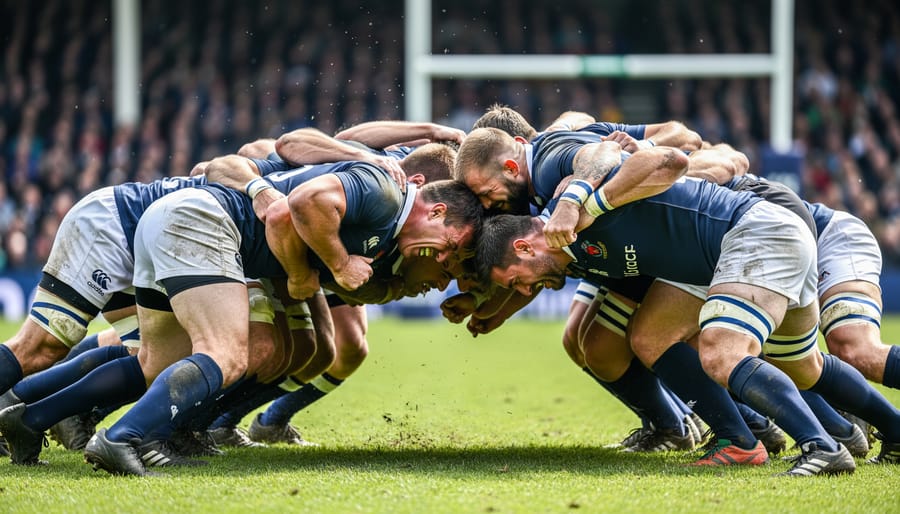
Rugby’s physical nature creates multiple pathways for head impacts, each carrying its own risk profile. The scrum generates tremendous compressive forces, players’ heads and necks absorb repeated loads as eight-person packs collide and push. Even well-executed scrums involve skull-to-shoulder contact and sudden directional changes that can shake the brain. Collapsed or improperly engaged scrums dramatically increase impact severity.
Tackles present the highest frequency of head contact. Ball carriers lowering into contact often collide helmet-to-helmet with defenders, while tacklers frequently strike their heads against opponents’ hips, thighs, or the ground. Side-on tackles create rotational forces that are particularly dangerous for brain tissue. The 15-a-side game’s stop-start pattern means players endure these collisions while already fatigued, compromising both technique and protective response.
Rucks and mauls pack multiple players into tight spaces where heads get trapped between bodies, knees, and boots. Players entering rucks often dive over the ball with minimal protection, leading to head-first contact. The chaotic nature of breakdown play makes accidental knees and elbows to the head common, even with strict officiating.
Research shows collision intensity differs by format. The sevens vs rugby union comparison reveals that while sevens features fewer set-piece collisions, the faster pace and more open field running increase high-speed tackle impacts. Union forwards face repetitive low-grade impacts through scrums and mauls that may contribute to abnormal hyperphosphorylated tau buildup over time, while sevens backs experience fewer total hits but at higher velocities.
Types of Head Injuries and CTE-Related Conditions in Rugby
Recognizing Early Warning Signs
Spotting the signs of head injury early can make a crucial difference in a player’s long-term health. Immediate concussion symptoms are often the most obvious: a player may appear dazed or confused, lose consciousness briefly, struggle to recall recent events, or complain of headaches and dizziness. You might notice slurred speech, delayed responses to questions, or balance problems when they stand. Any of these signs should trigger removal from play and prompt medical evaluation.
The subtler warning signs emerge over days and weeks. A player who previously loved training might suddenly seem withdrawn or irritable. Concentration difficulties appear in school or work. Sleep patterns shift, either sleeping far more than usual or struggling with insomnia. Some athletes report persistent headaches that won’t respond to typical remedies, or unusual sensitivity to light and noise.
Cognitive changes can be particularly telling. A player may forget recent conversations, take longer to process information during team meetings, or struggle with decisions that were once automatic on the pitch. Mood swings, increased anxiety, or unexplained emotional responses also warrant attention.
Family members often notice these changes first. Coaches and teammates should create an environment where players feel safe reporting symptoms without fear of losing their position. When in doubt, sit the player out and seek medical clearance before return to play.
What CBD Is and How It Works in the Body

CBD, short for cannabidiol, is a compound extracted from cannabis and hemp plants that has gained attention in sports medicine for its potential therapeutic benefits. Unlike THC (tetrahydrocannabinol), CBD doesn’t produce a “high” or impair athletic performance, which is why researchers are investigating its applications for rugby players dealing with head injury concerns.
When you consume CBD, it interacts with your body’s endocannabinoid system, a network of receptors that helps regulate inflammation, pain perception, mood, and immune responses. This system exists throughout your brain, spinal cord, and peripheral tissues. CBD doesn’t bind directly to these receptors like THC does; instead, it influences them indirectly, encouraging your body to produce and use its own endocannabinoids more effectively while also interacting with other receptor systems involved in inflammation and stress response.
What makes CBD particularly interesting for brain health is its anti-inflammatory properties. After a head impact, your brain releases inflammatory molecules as part of its natural response to injury. While some inflammation is necessary for healing, excessive or chronic inflammation can damage neurons and contribute to the long-term changes seen in CTE. CBD appears to reduce this excessive inflammatory response in animal studies, potentially limiting secondary damage after head trauma.
CBD also shows neuroprotective effects in laboratory research, meaning it may help shield brain cells from damage and death following injury. It does this partly by reducing oxidative stress, an imbalance between harmful free radicals and protective antioxidants in your cells. Some studies suggest CBD can help maintain the blood-brain barrier’s integrity after trauma, prevent cell death pathways from activating, and support the brain’s natural repair mechanisms. These properties explain why neuroscience researchers are exploring whether CBD could become part of concussion management protocols or strategies to reduce cumulative brain injury risk in contact sports.
How CBD May Help Rugby Players With Brain Health
The Science Behind CBD and Brain Inflammation
Research into CBD’s effects on traumatic brain injury reveals promising mechanisms that matter for rugby players concerned about repeated head impacts. When the brain sustains trauma, immune cells release inflammatory molecules called cytokines that can damage healthy tissue if the response becomes chronic. Laboratory studies show CBD reduces several key pro-inflammatory cytokines, potentially limiting the cascade of damage that follows concussions.
The oxidative stress component is equally important. Brain injuries trigger an overproduction of reactive oxygen species, unstable molecules that attack cell membranes and DNA. A 2019 preclinical study found CBD increased the brain’s natural antioxidant defenses while directly scavenging these harmful molecules, creating a two-pronged protective effect. The researchers observed reduced cell death in brain tissue samples treated with CBD compared to untreated controls.
Cell death prevention represents another avenue. After head trauma, some neurons enter a self-destruct sequence called apoptosis even if they weren’t directly damaged. CBD appears to interrupt this process by modulating calcium levels inside cells and supporting mitochondrial function, the energy centers that often fail after injury.
A 2018 review in Frontiers in Neurology examined CBD’s neuroprotective properties across multiple traumatic brain injury studies. The authors noted consistent anti-inflammatory effects and improved behavioral outcomes in animal models, though they emphasized the gap between these findings and human applications.
The challenge remains translating laboratory results into practical benefits for athletes. Most studies use isolated brain cells or animal subjects with controlled injuries that don’t perfectly mirror rugby’s pattern of repeated subconcussive impacts. Quebec rugby players considering CBD should understand this research represents early-stage evidence of biological potential rather than proven protection against CTE development.
CBD for Recovery and Symptom Management
Quebec rugby players navigating concussion recovery often face a cluster of symptoms that can persist for weeks or months: persistent headaches, heightened anxiety, disrupted sleep patterns, and difficulty concentrating. CBD has emerged as a potential tool in managing these specific post-concussion challenges, though players should always work within medical supervision and Rugby Quebec’s return-to-play protocols.
For headaches, CBD’s anti-inflammatory properties may help reduce the neuroinflammation that contributes to post-concussion pain. Some players report taking CBD oil sublingually during recovery periods, finding it offers relief without the cognitive fog associated with traditional pain medications. The typical approach involves starting with a low dose, around 10-20mg daily, and adjusting based on symptom response and physician guidance.
Anxiety frequently intensifies after head injuries, both from the physical brain changes and the stress of being sidelined. CBD interacts with serotonin receptors in ways that may help regulate mood and reduce the racing thoughts that keep injured players awake at night. This sleep benefit proves particularly valuable since quality rest is essential for brain healing.
The timing matters: CBD shouldn’t be viewed as a quick fix to speed return to play. Instead, it fits into a comprehensive recovery plan that includes complete rest initially, gradual reintroduction of activity, cognitive rehabilitation, and clearance from medical professionals before any contact practice resumes. Players using CBD during recovery should document their symptoms, dosages, and progress to share with their healthcare team.
Real-World Applications: CBD Use Among Rugby Athletes
Rugby players at every level are beginning to incorporate CBD into their daily routines, though adoption remains uneven across professional and community levels. In elite rugby, some athletes use CBD oils or topical creams as part of their post-match recovery, particularly after games involving heavy contact. The typical approach includes CBD taken before sleep to improve rest quality, or applied directly to sore muscles and joints after training sessions.
At the community level in Quebec, CBD use varies widely. Some clubs have players who experiment with CBD products for general wellness, while others remain cautious due to cost, uncertainty about effectiveness, or lingering questions about sports regulations. Quebec Rugby’s emphasis on player safety means that any wellness approach, including CBD, should complement, not replace, established concussion protocols and adherence to safe play rules.
Professional teams increasingly view CBD as one tool among many for managing the physical demands of rugby. Strength and conditioning coaches report that players using CBD often do so alongside ice baths, physiotherapy, proper nutrition, and adequate sleep, a holistic approach to recovery. Some athletes find CBD helps reduce the inflammation that follows particularly bruising matches, while others value its potential to ease anxiety and improve mental recovery after head knocks.
The real-world picture shows cautious optimism rather than widespread embrace. Most rugby programs prioritize proven interventions: proper tackling technique, immediate removal from play after suspected concussions, graduated return-to-play protocols, and ongoing education about head injury risks. CBD sits within this broader framework as an emerging option that some players find beneficial for recovery, not as a standalone solution to CTE risk or concussion management.
Safety Measures and Prevention: Beyond CBD
While CBD research offers promising directions, the most effective approach to reducing CTE risk in rugby starts with comprehensive prevention measures already underway across Quebec and the global rugby community. Quebec Rugby has embraced a multi-layered safety framework that addresses technique, education, and immediate response protocols, because protecting players’ long-term brain health requires action before, during, and after impacts occur.
Rule changes at international and provincial levels reflect growing awareness of head injury risks. World Rugby has implemented stricter high-tackle sanctions, lowering the legal tackle height to reduce direct head contact. These modifications filter down to Quebec competitions, where referees receive ongoing training to enforce head contact protocols consistently. The zero-tolerance approach to dangerous play means players who make contact with an opponent’s head face immediate consequences, creating a deterrent that changes behavior at all levels of the game.
Proper technique training forms the foundation of prevention. Teaching players to tackle with heads to the side, keeping their necks strong and eyes open, significantly reduces the risk of head-to-head collisions. Quebec Rugby’s coaching education programs emphasize progressive skill development, starting with basic body positioning before advancing to full-contact drills. Young players learn the biomechanics of safe play when their bodies and brains are still developing, establishing patterns that protect them throughout their rugby careers.
Prevention strategies working together across Quebec rugby include:
– Progressive tackling technique training that prioritizes head placement and body positioning from youth levels through senior competition
– Immediate pitch-side Head Injury Assessment protocols requiring trained medical personnel to evaluate any suspected concussion before the player continues
– Graduated return-to-play guidelines that mandate symptom-free periods and medical clearance before resuming contact training or matches
– Equipment considerations including properly fitted mouthguards and baseline impact-monitoring technology where available
– Modified contact rules for youth rugby that reduce collision frequency and intensity during critical developmental years
Education extends beyond players to coaches, referees, parents, and club administrators. Concussion recognition workshops help everyone in the rugby community identify warning signs, from visible impacts to subtle behavioral changes. Quebec Rugby provides resources in both French and English, ensuring accessibility across the province’s diverse communities. When everyone understands the stakes, players feel supported in reporting symptoms rather than hiding them to stay on the field.
Return-to-play protocols require patience and medical oversight. The graduated six-stage process, beginning with complete rest and advancing through light activity, sport-specific exercise, non-contact training, full-contact practice, and finally match return, ensures players’ brains have adequately healed before facing further risk. Rushing this process increases vulnerability to second-impact syndrome and potentially sets the stage for long-term damage.
What Coaches and Officials Should Know
Coaches and officials stand on the front line of player safety. Your immediate recognition of head injuries can prevent further damage and save careers. Watch for disorientation, stumbling, slow responses to questions, or a player who seems “not quite right” after contact. Trust your instinct, if something looks off, remove the player immediately. Never let them convince you they’re fine to continue.
Implement the “if in doubt, sit them out” standard without exception. Create a team culture where reporting symptoms is seen as strength, not weakness. Players need to know that speaking up protects their future, not just one match. Share stories from rugby history where athletes who prioritized health went on to longer careers than those who hid injuries.
Document every suspected head injury, even when it seems minor. Subconcussive impacts add up. Ensure parents, partners, or housemates know what symptoms to monitor at home, headaches, mood changes, sleep problems, memory issues. These can emerge hours after the match.
Support recovery by enforcing graduated return-to-play protocols. No shortcuts. A player who returns too soon risks permanent damage. Work with qualified medical professionals, not just team volunteers.
Train your team in proper tackle technique that reduces head contact. Poor form causes injuries. Hold regular safety briefings that normalize the conversation around concussions. When leadership treats brain health as seriously as fitness, players follow. Your vigilance today protects the Quebec rugby community tomorrow.
Frequently Asked Questions About Rugby, CTE, and CBD
Can CTE be diagnosed in living rugby players?
Currently, CTE can only be definitively diagnosed through brain tissue examination after death. However, doctors can assess concussion history, monitor symptoms like memory problems and mood changes, and use brain imaging to track changes over time, helping guide treatment even without a confirmed CTE diagnosis.
Is CBD legal for rugby players to use?
CBD was removed from the World Anti-Doping Agency’s prohibited list in 2018, making it legal for rugby players at all levels. However, products must contain no THC or other banned cannabinoids, so players should choose third-party tested CBD from reputable sources and consult with team medical staff before use.
Does wearing headgear prevent CTE?
Headgear reduces cuts and superficial injuries but doesn’t prevent the brain from moving inside the skull during impacts, which causes concussions and contributes to CTE. Proper tackling technique, rule enforcement, and limiting contact in training offer more effective protection than protective equipment alone.
What should I do if I suspect a concussion during play?
Remove the player from the field immediately, even if they want to continue. Don’t let them return to play that day, regardless of how quickly symptoms seem to improve, and arrange for medical evaluation by a qualified healthcare provider before any return to training or competition.
Where can Quebec rugby players get support for brain injury concerns?
Players can contact Quebec Rugby for guidance on concussion protocols and medical resources, consult sports medicine clinics specializing in concussion management, or reach out to organizations like Parachute Canada’s ThinkFirst program for brain injury education and support services.
These questions reflect concerns voiced across rugby communities as awareness of head injury risks grows. Many players worry about their long-term brain health but aren’t sure where to turn for reliable information or help. Quebec Rugby maintains updated concussion management guidelines aligned with Rugby Canada protocols, providing coaches and players with clear steps for assessment and return-to-play decisions.
If you’re experiencing persistent headaches, concentration difficulties, mood changes, or sleep problems months after a head injury, don’t dismiss them as normal recovery. These symptoms deserve medical attention from a healthcare provider familiar with sports-related brain injuries, who can develop an appropriate treatment plan that might include physical therapy, cognitive rehabilitation, or other interventions tailored to your specific situation.
Player safety isn’t something we discuss after the final whistle, it’s woven into every scrum, every tackle, every training session across Quebec rugby. The growing awareness of CTE reminds us that protecting our athletes means looking beyond the immediate game to their lives decades from now.
Quebec Rugby remains committed to evidence-based approaches that prioritize long-term health without diminishing the sport we love. As research continues into both prevention strategies and potential therapeutic options like CBD, we’ll keep evaluating what works and what doesn’t. The science is evolving, and so are our protocols.
What won’t change is our dedication to education. Coaches need to recognize warning signs. Players need to feel comfortable reporting symptoms without fear of judgment. Officials need the tools to enforce safety measures consistently. Parents and supporters deserve transparency about risks and the steps we’re taking to minimize them.
CBD shows promise in early research, but it’s one piece of a much larger puzzle that includes better technique training, stricter concussion protocols, and cultural shifts that value a player’s future as much as today’s performance. We can’t eliminate all risk from a contact sport, but we can be honest about what we know, aggressive about implementing safety measures, and humble about what we’re still learning.
Rugby teaches respect, discipline, and community. Those same values demand we protect the people who make this sport possible.